Summary AI-generated
Summarised by an AI assistant when this source was saved. Double-check against the original.
In summary, the most interesting aspect is how shifting from memorizing isolated technical terms to understanding the underlying trade-offs and principles transforms system design from a memorization task into a confident, reasoning-driven process.
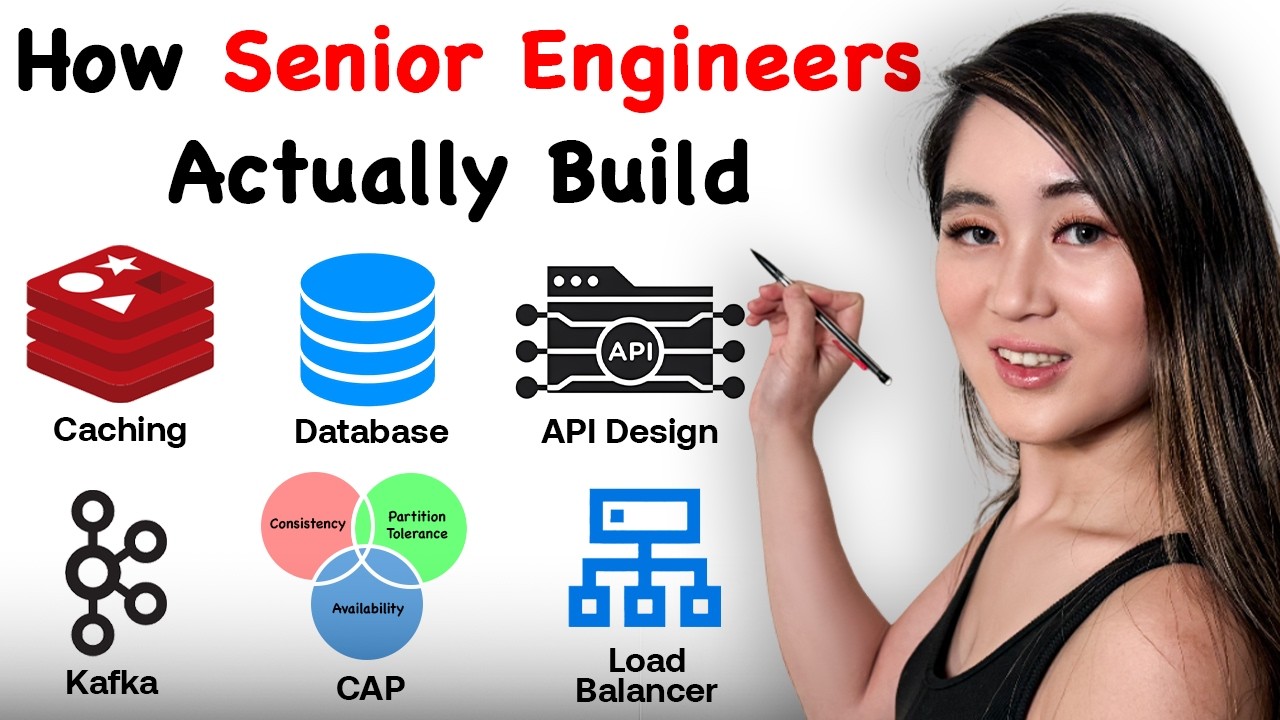
- Shifting from memorizing definitions to understanding the \"why\" behind concepts is key to senior-level system design.
- Stateless servers enable true horizontal scaling by offloading state to shared stores.
- Caching is fundamentally a trade-off between speed and data freshness, not just a technical tool.
- CAP theorem is a practical choice between consistency and availability, often applied per-service rather than globally.
- Message queues decouple services, preventing cascading failures and improving system reliability.
- SQL vs NoSQL selection depends on whether your workload requires strict ACID guarantees or massive horizontal scale.
- API design is a long-term contract that requires explicit versioning, resource-focused endpoints, and thorough documentation.
Notes this inspired
- CachingEstablished
Cache = trade off speed vs freshness. You can also use the CDN as a cache for api results. Short term. Ok if only a few. Consider how often it changes, how…
- Consistency vs AvailabilityGrowing
Consistency = every read gets most recent write. Availability = the system responds even if it's not the most recent data. For example with Ticketmaster, consistency is way more important, but for…
- Horizontal scalingSeedling
Horizontal scaling only works if servers are stateless aka, server needs to treat the request as if the user came in here for the very first time.
- REST vs GraphQLGrowing
When is GraphQL is a good idea? When flexibility of what data to retrieve is important, but it is possibly rarely worth the overhead.
- Stateless vs Sticky sessionsGrowing
Sticky session means it'll only work if the user has time come back to a specific server. Stateless means server needs to treat the request as if the user came in here…
- Database ACIDGrowing
Also cited by
- System Design interviewEstablished
Allocate specific time slots: 5m for requirements, 20m for high-level design, 15m for deep dive, and 5m for wrapping up. Define requirements and use cases. functional requirements first, and non-functional requirements if…